

The Man Box Study Explained: 7 Masculinity Rules Linked to Depression, Shame, and Violence — and the Brotherhood Fix
The “Man Box” is a set of masculinity rules linked to depression, suicidal thoughts, risky behavior, bullying, and violence. Here are the 7 pillars—and how to break them.
Brotherhood Protocol Team
1/17/20264 min read
Men aren’t “broken.”
A lot of men are just living inside a script.
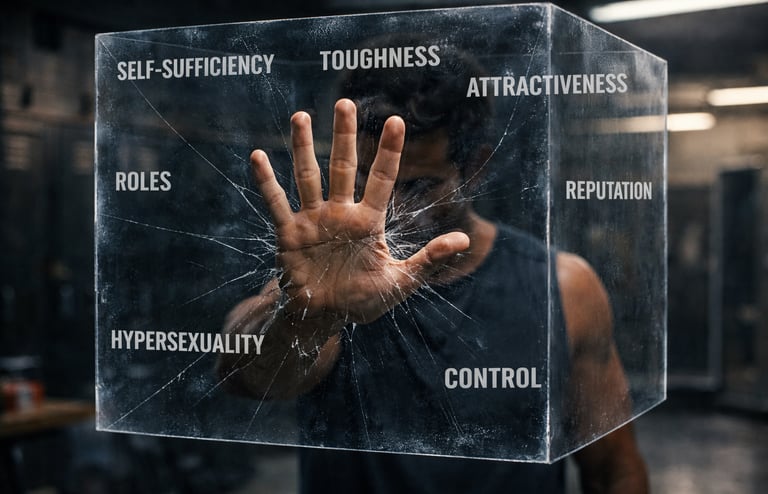
Researchers call it the Man Box: a set of socially enforced rules about what a “real man” is allowed to be. The problem isn’t masculinity. The problem is performative masculinity—the kind that looks strong on the outside and collapses under pressure.
The data is ugly: men who strongly buy into Man Box rules show higher depression screening rates, higher suicidal ideation, less help-seeking, and dramatically higher odds of perpetrating bullying and sexual harassment.equimundo
And newer findings in NSW show the men who most strongly endorse rigid norms are 7.5× more likely to perpetrate intimate partner violence, 10× more likely to perpetrate sexual violence against a partner, and far more likely to report thoughts of suicide.
This isn’t about shaming men.
It’s about giving men a system that builds strength without destroying them.
Below are the 7 Man Box pillars—with what the research shows is harmful, and the Brotherhood Protocol replacement.
1) Self-Sufficiency
Isolation disguised as strength
The Man Box rule: “Handle it alone. Don’t ask for help.”
What the study found: Men inside the Man Box are less likely to seek support from friends, and the report warns that the “all good” posture can mask depression and frequent thoughts of suicide—while those inside are even less likely to reach out.
Build one accountability link (a brother, coach, mentor).
Track habits daily (because feelings lie—data doesn’t).
Replace “alone” with “structured”: morning routine + training + sleep.
Hard truth: "isolation doesn’t make you tough. It makes you silent".
2) Acting Tough
Emotional shutdown mistaken for control
The Man Box rule: “Never look affected. Never look scared.”
What the study found: In the US and UK, men inside the Man Box were more likely to meet a depression screening threshold (PHQ-2), and suicidal ideation was higher among men inside the box across countries.
Emotional control isn’t suppression. It’s regulation:
10 minutes breathwork daily
journal: wins / lessons / what you messed up
7.5–9 hours sleep (no negotiation)
Result: "you stop reacting like a wounded boy and start responding like a calm man".
3) Physical Attractiveness
Gym shame + the steroid-guru trap
The Man Box rule: “If you don’t look powerful, you don’t get respect.”
What the study found: The Man Box key findings note that young men’s sense of attractiveness links strongly to muscle bulk and body shape, not a stable internal confidence.
Separate research also finds male body dissatisfaction is associated with anxiety and depression (systematic review + meta-analysis). pmc.
How it shows up in real life (and why men quit):
Beginner walks into the gym with a beginner body → feels judged → disappears.
Then the “steroid guru” sells shortcuts, humiliation, and fake certainty.
Meanwhile real athletes usually respect the guy who shows up consistently.
Lift 3–5×/week (squat, deadlift, bench, pull-ups, overhead press)
Walk 8–12k steps/day
Protein 1.6–2.2g/kg + cut ultra-processed trash
Sleep 7.5–9 hours
Hard truth: "Most men quit too early. The real glow-up is 12–24 months".
4) Rigid Roles
Performance over purpose
The Man Box rule: “Men must always lead, decide, provide—no exceptions.”
What studies found: Man Box adherence is linked with harmful outcomes (including bullying and violence).
NSW findings show higher endorsement is tied to sharply higher rates of intimate partner violence.
Leadership isn’t domination. It’s standards:
build skills
build money
build competence
keep your word
"A man with structure doesn’t need control".
5) Reputation Policing
Living owned by other people’s opinions
The Man Box rule: “Don’t do anything that could cost you ‘real man’ status.”
What the study found: The Man Box report links being “inside” the box to weaker emotional support networks and less comfort seeking help from friends—because everything becomes performance.
Stop negotiating your identity with the crowd
Slow down: posture, eye contact, deliberate movements
Build self-respect through actions (gym, skills, discipline)
"When you’re grounded, you don’t need approval".
6) Hypersexuality
Dopamine culture sold as masculinity
The Man Box rule: “Always want it. Never say no.”
What studies found: The Man Box research links high adherence with much higher odds of perpetrating sexual harassment.
NSW data also shows violent pornography consumption is widespread among 18–30 men surveyed, rising to 83% among those who most strongly agree with rigid Man Box norms.
cut porn / protect dopamine (biggest leak for discipline)
replace impulse with routine
"if you can’t say “no,” you’re not in control"
7) Aggression & Control
Violence as status
The Man Box rule: “It teaches men to perform aggression instead of building controlled power.
It creates loud, reactive, insecure dominance. It rewards intimidation instead of discipline".
What studies found: In the US/UK, men in the Man Box were as much as 6–7× more likely to perpetrate online/physical bullying, and 6× more likely to perpetrate sexual harassment.
NSW: men who most strongly agree with Man Box rules were 7.5× more likely to perpetrate at least one form of intimate partner violence and 10× more likely to perpetrate sexual violence against a partner.
NSW also reports worse mental health for the high-endorsement group, including 57% reporting thoughts of suicide vs 26% in the lowest-endorsement group.
Presence beats dominance. Calm beats chaos.
A disciplined man doesn’t need fear to feel powerful.
Because real strength is not about being aggressive all the time.
It’s about being capable of violence, chaos, and force — and choosing control.
That’s why the ancient principle still stands:
Better to be a warrior in a garden than a gardener in a war.
A gardener in a war is overwhelmed, reactive, and terrified.
He has no tools for conflict, no frame under pressure, no inner armor.
A warrior in a garden is different.
He is calm not because he is weak — but because he is trained.
He has the capacity for intensity, but he is not ruled by it.
He doesn’t need to prove. He doesn’t need to dominate. He doesn’t need to raise his voice.
"He knows he could fight.
So he doesn’t need to".
The Brotherhood Protocol summary
The Man Box sells a fake version of strength: loud, fragile, approval-hungry.
Real strength is body standards, discipline systems, emotional regulation, skills, and grounded presence.
If you want structure, we built it: the Brotherhood Protocol is a step-by-step system + community support (anonymous if you need it). You don’t have to do it alone.
Quick links
© 2025 Brotherhood Protocol. All rights reserved.


Brotherhood Protocol is a modern masculinity platform dedicated to helping men build discipline, emotional resilience, self-respect, and direction in life. We focus on replacing toxic masculinity with structure, clarity, and inner strength so men can lead their lives instead of performing them.
Get exclusive content and offers straight to your inbox
Brotherhood Protocol
subscribe for updates